
Dual Forms Extensions with Polygel + Russian Manicure
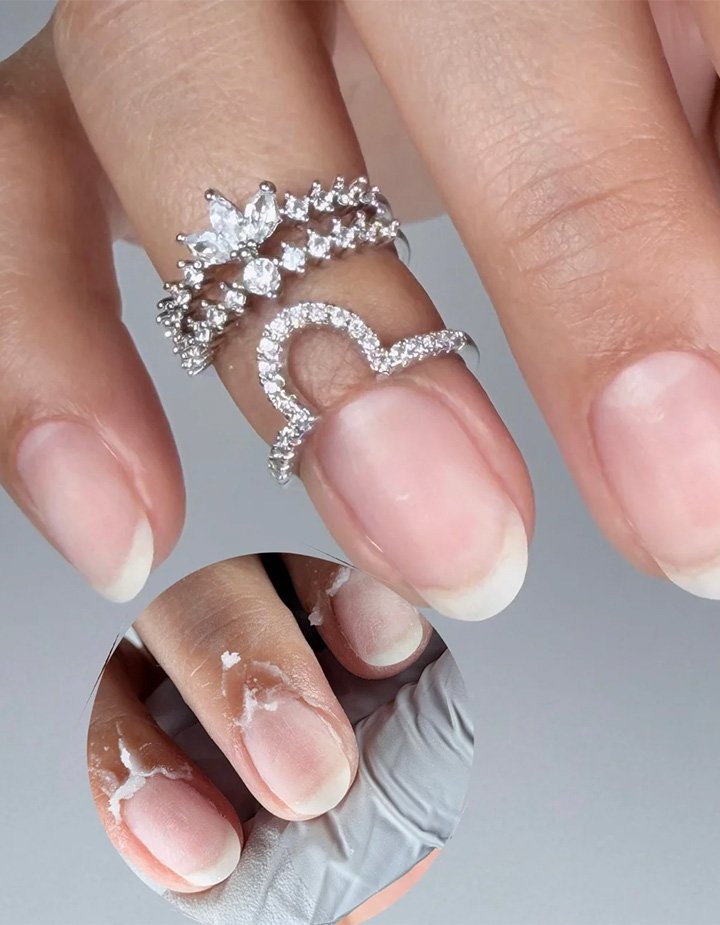
This service combines the extreme hygiene of the Russian Manicure with the lightweight feel of Polygel, a hybrid between gel and acrylic. It begins with a dry cuticle treatment using Russian manicure techniques to lift and remove adhered cuticles, leaving the matrix free and the sidewalls perfectly defined. The extension is then applied using Dual Forms, with the Polygel offering an ideal balance—flexible yet impact-resistant—and serving as an excellent option for sensitive skin since it does not require an aggressive bonding layer. The result is nails with a perfectly architectural, bulge-free structure, thanks to the Russian Manicure preparation that ensures the extension adheres directly to a nail free of moisture and residue.
Description
This service combines the extreme hygiene of the Russian Manicure with the lightness of Polygel (a hybrid between gel and acrylic). We begin with the dry cuticle treatment, using Russian manicure techniques to lift and remove adhered cuticles, leaving the matrix free and a perfectly defined sidewall.
Next, we perform the extension using Dual Forms. Polygel, due to its consistency, allows us to easily mold an extension that is not as rigid as acrylic nor as flexible as traditional gel, offering an ideal middle ground: it is flexible yet impact-resistant. As it does not require an aggressive bonding layer, it is an excellent option for sensitive skin. The result is nails with a perfectly architectural structure, without bulkiness, thanks to the previous preparation (Russian Manicure) allowing the extension to adhere directly to a nail free of moisture and residue.
Essential Summary
Key Characteristics?
Dry (or Semi-Dry) Technique:
Traditionally performed without soaking the nails in water or cuticle remover, working on dry cuticles. Some modern versions allow brief softening, but the core principle is to avoid over-hydration, which can cause the cuticle to lift unevenly.
By not swelling with water, dead skin is identified and removed with greater precision.
The Key Tool: The Electric File (E-File):
A professional electric file with adjustable speed and specific bits (mandrels) is used.
The bit does not cut; it gently sands and polishes the cuticle and dead skin from the nail's proximal fold.
This allows for millimeter-perfect control and avoids accidental cuts or removal of live skin.
The Result:
Sharp, "pushed-back" cuticle line: Creates a perfectly defined "smile line" (half-moon) at the nail base.
Ultra-clean and polished finish: The file also polishes the surface of the natural nail, removing fine layers of residual skin.
Extended durability: By completely removing the cuticle without residue, polish (especially gel or hard gel) adheres better and is less likely to lift from the base.
Natural and minimalist appearance: Ideal for French manicures or light colors, as the nail bed looks flawless.
Basic Process:
Hand and nail disinfection.
Cuticle Cleaning and Removal with the E-File: The core step, meticulously working on the dead skin around the nail.
Shaping: Shaping the natural nail or extension with the file.
Buffing: Gently buffing the natural nail surface to remove imperfections and natural shine.
Polish application (regular, gel, or hard gel).
Benefits vs. Traditional Manicure (with cuticle nippers):
Safer: Drastically reduces the risk of cuts, wounds, and infections since no blades or nippers are used on the skin.
More Precise: Allows for detailed work impossible with manual tools.
Better for Long-Term Nail Health: By not cutting, it prevents cuticles from growing back thicker or creating hangnails.
More Durable and Professional Result.
Important Considerations:
Requires High Specialization: This is a technique that should only be performed by a trained professional. Improper use of the e-file can seriously damage the natural nail plate.
Not for Beginners: The technician must have in-depth knowledge of nail anatomy and expert handling of the equipment.
Can be More Expensive: It often commands a higher price due to the specialization, equipment, and time invested.
Related projects

- Premium Services

- Premium Services

- Premium Services

- Premium Services