Builder Gel on Natural Nails + Russian Manicure

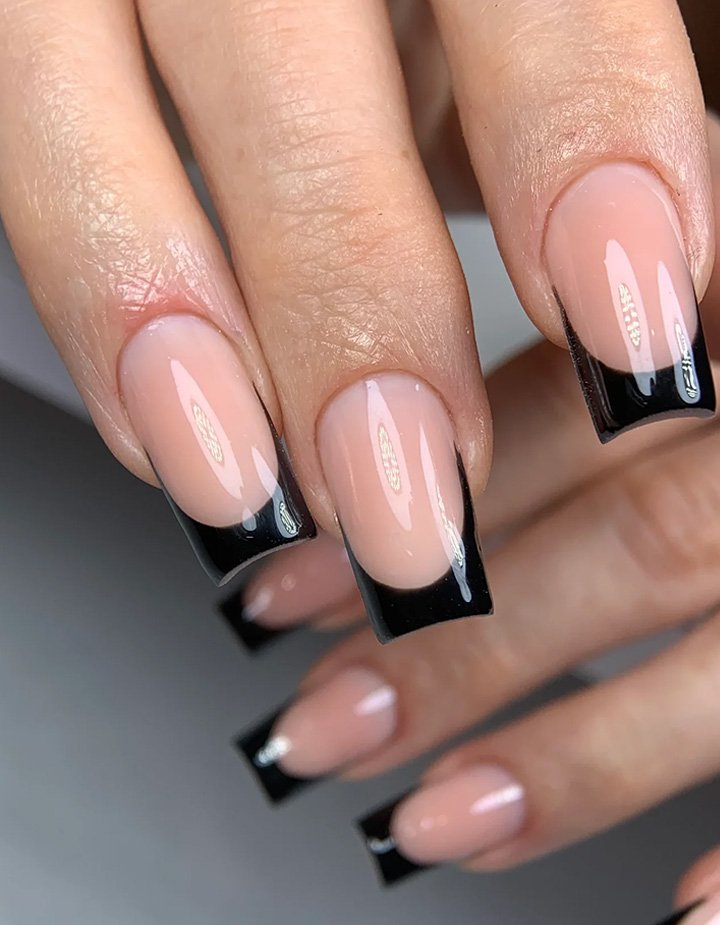
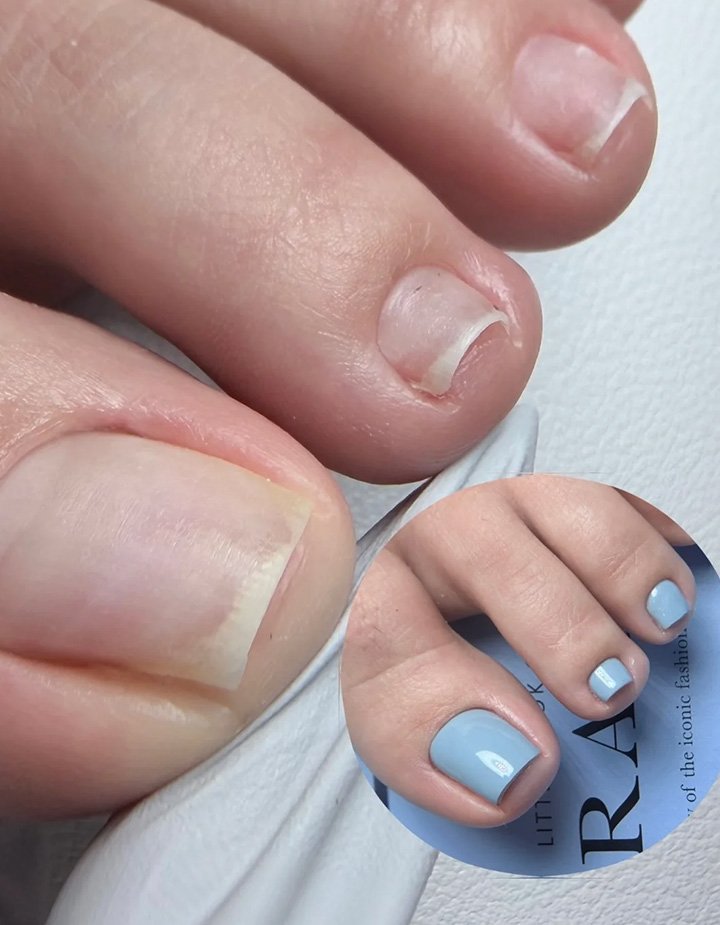
Ideal for those looking to strengthen natural nails without adding excessive length, this service begins with a deep Russian Manicure using sterile instruments and a low-speed drill to meticulously clean the nail bed, removing 100% of dead cuticle and excess skin for a completely clean, dry surface. Over this flawless base, Builder Gel is applied directly onto the natural nail using a sculpting technique to create a reinforcing layer that corrects imperfections, adds strength, and acts as a thin yet durable prosthetic, with the gel self-leveling to form a perfect curve that prevents breakage. The result is a flawless finish—semi-permanent polish or gel color over a perfectly symmetrical structure—with a natural yet polished appearance.


Description

Ideal for those looking to strengthen their natural nails without adding excessive length. This service begins with a deep Russian Manicure, where we work with sterile instruments and a low-speed drill to perform a meticulous cleaning of the nail bed, removing 100% of dead cuticles and excess skin, achieving a completely clean and dry surface.

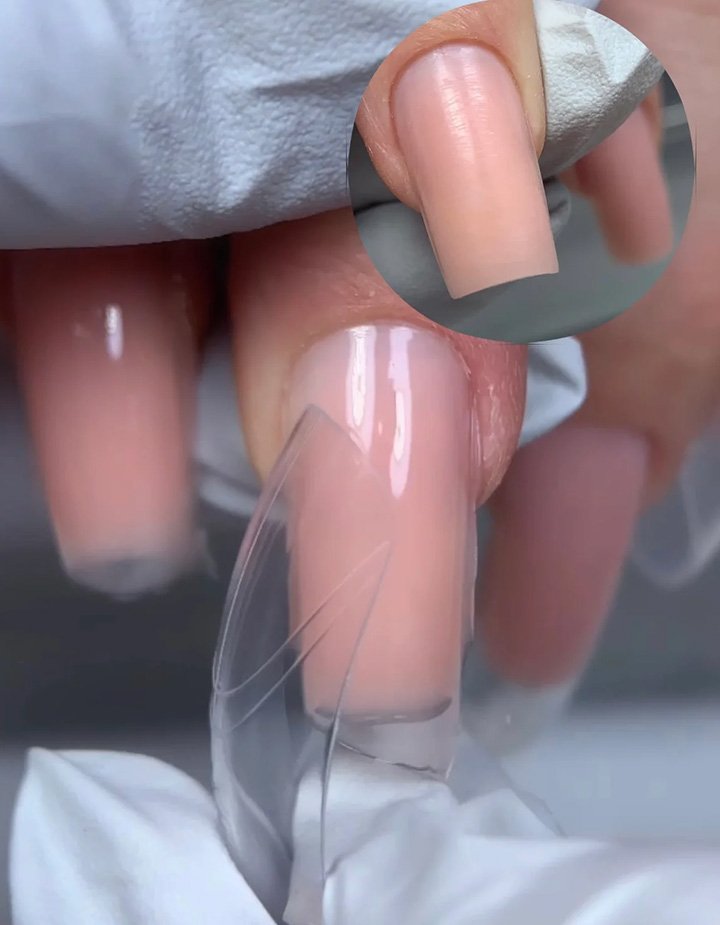
On this impeccable base, we apply Builder Gel directly onto your natural nail. Using the "sculpting" technique, we create a reinforcing layer that corrects imperfections, adds hardness, and acts as a thin yet resistant prosthetic. The builder gel self-levels, creating a perfect curve that prevents the nail from breaking. To finish, the result is flawless: a semi-permanent polish or colored gel on a perfectly symmetrical structure, with a look as natural as it is polished.

Essential Summary

Key Characteristics?

  1. Dry (or Semi-Dry) Technique:

    • Traditionally performed without soaking the nails in water or cuticle remover, working on dry cuticles. Some modern versions allow brief softening, but the core principle is to avoid over-hydration, which can cause the cuticle to lift unevenly.

    • By not swelling with water, dead skin is identified and removed with greater precision.

  2. The Key Tool: The Electric File (E-File):

    • professional electric file with adjustable speed and specific bits (mandrels) is used.

    • The bit does not cut; it gently sands and polishes the cuticle and dead skin from the nail's proximal fold.

    • This allows for millimeter-perfect control and avoids accidental cuts or removal of live skin.

  3. The Result:

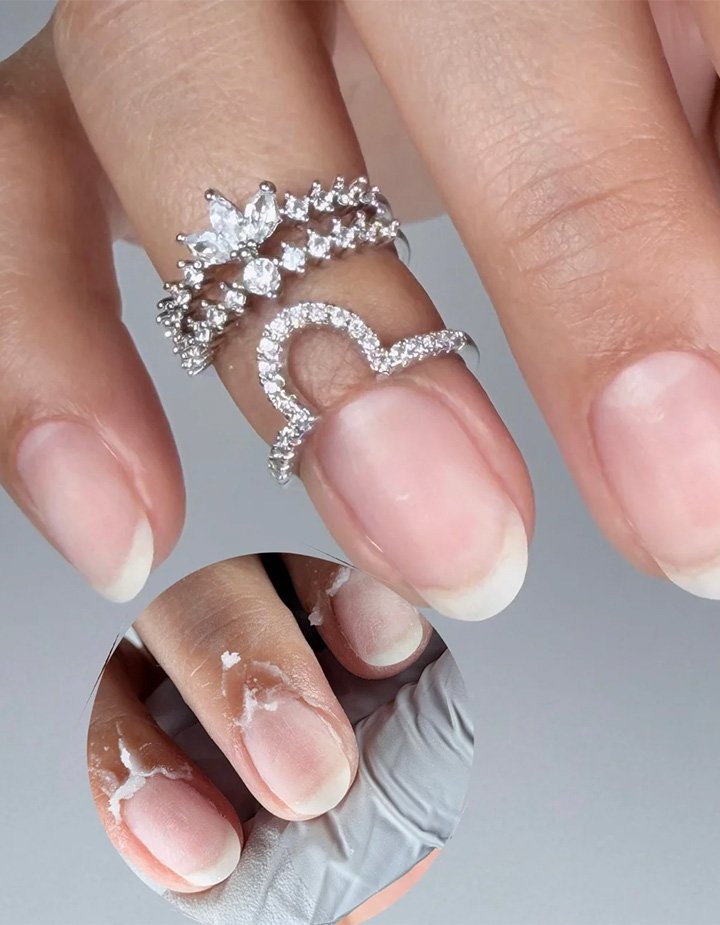
    • Sharp, "pushed-back" cuticle line: Creates a perfectly defined "smile line" (half-moon) at the nail base.

    • Ultra-clean and polished finish: The file also polishes the surface of the natural nail, removing fine layers of residual skin.

    • Extended durability: By completely removing the cuticle without residue, polish (especially gel or hard gel) adheres better and is less likely to lift from the base.

    • Natural and minimalist appearance: Ideal for French manicures or light colors, as the nail bed looks flawless.

Basic Process:

  1. Hand and nail disinfection.

  2. Cuticle Cleaning and Removal with the E-File: The core step, meticulously working on the dead skin around the nail.

  3. Shaping: Shaping the natural nail or extension with the file.

  4. Buffing: Gently buffing the natural nail surface to remove imperfections and natural shine.

  5. Polish application (regular, gel, or hard gel).

Benefits vs. Traditional Manicure (with cuticle nippers):

  • Safer: Drastically reduces the risk of cuts, wounds, and infections since no blades or nippers are used on the skin.

  • More Precise: Allows for detailed work impossible with manual tools.

  • Better for Long-Term Nail Health: By not cutting, it prevents cuticles from growing back thicker or creating hangnails.

  • More Durable and Professional Result.

Important Considerations:

  • Requires High Specialization: This is a technique that should only be performed by a trained professional. Improper use of the e-file can seriously damage the natural nail plate.

  • Not for Beginners: The technician must have in-depth knowledge of nail anatomy and expert handling of the equipment.

  • Can be More Expensive: It often commands a higher price due to the specialization, equipment, and time invested.